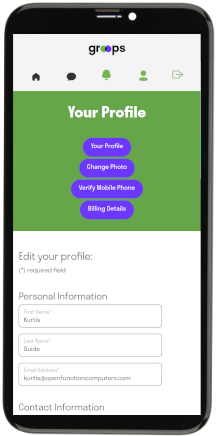
Work directly with Vogey's customer to deliver a custom application from idea to launch.
Project Details
When a client has an idea you need to act fast to capture data and prove the idea’s viability. We went from idea to prototype to launch in under 3 months.
The process
What originally started out as an idea that tried to use WordPress plugins and some 3rd party providers quickly grew into a business model where that technology stack was not long term safe. After months of internal deliberation the client decided to move forward with a custom web application to verify their business model.
Step 1: Build out functionality, roles, permissions, and whatever else
Yeah, that sounded kinda vague to us too, which is why we interacted directly with the client to help define scope as we worked. There are things that every web application needs (authentication, authorization, etc) but when it comes to business logic the sky is the limit.
Over the course of the first month we were able to scaffold out a basic app with the necessary user levels. This was then pushed to a staging enviroment on Vogey’s prefered cloud provider (yes, we know how to work with more than just Amazon Web Services!). Form there we set up regluar meetings to continue to define scope and get the product launched.
Step 2: Implement client approved design from Figma design comps
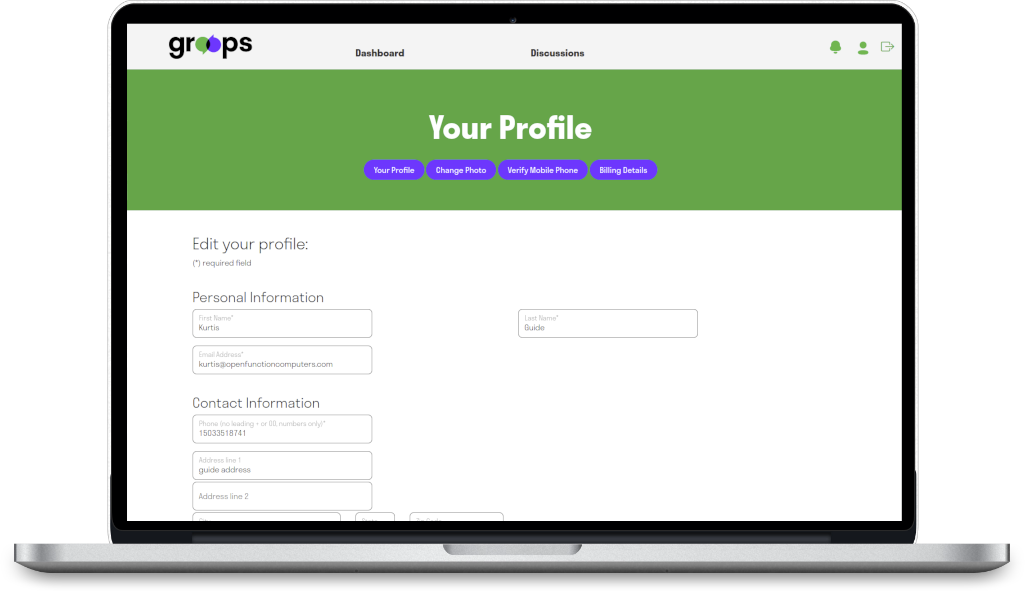
The nice thing about working in tandem with a dedicated designer is we can each focus on our strengths. While the designer was working with the client to define branding guidelines, look and feel, and getting approval on comps, we were free to bring the application to life.
We were then free to skin the application to match the approved designs, push that version up to staging and verify design integrity.
Step 3: Launch!
There’s always that moment of chaos before a launch, as everyone needs to understand the new roles and responsibilities after something is in front of the general public. DNS gets updated, SSL certificates are generated and then marketing annoucements go out. SUCCESS! We’ve launched!
But, then comes the aftermath. No business opens their doors and immediatly fires all their staff. Instead, we set up an issue board where the client could prioritize bug fixes and new features at the same time. As you can imagine, anything launched in under 3 months is going to have the bare bones necessary to run day to day operations. Next comes the long and arduous path of maintainin and enhancing this to optimize the daily tasks, add additional features, and fix any surprizes that pop up.